Wednesday
12th Aug 2026
Dhivehi Edition
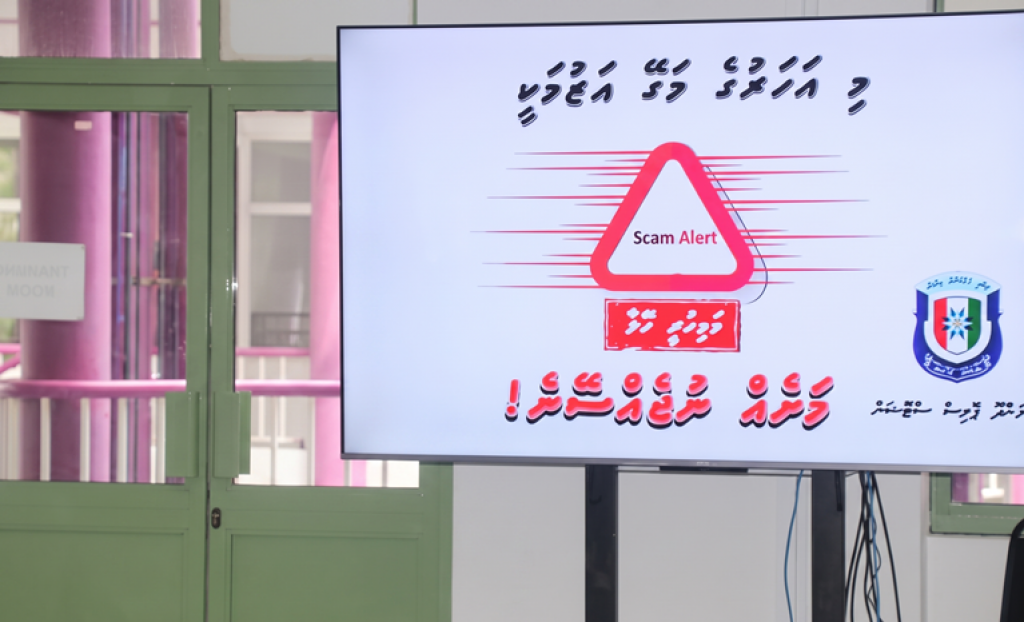
Photo: Police
The Maldives Police Service recorded 53 scam cases between August 2 and 8, with members of the public losing a total of MVR 475,275.76, according to statistics released by the Police Anti-Scam Centre.
Police said MVR 269,631.27 of the money lost has been recovered through efforts carried out in coordination with financial institutions.
The latest figures mark a significant increase from the previous reporting period, July 19 to 25, when 33 scam cases were reported, involving losses of MVR 184,235. Of that amount, MVR 72,073 was recovered.
Compared with the previous week, the number of reported cases increased by 20, or approximately 61 percent, while reported financial losses rose by MVR 291,040.76, an increase of approximately 158 percent. The amount recovered also increased substantially, with MVR 269,631.27 recovered during the latest period compared with MVR 72,073 previously.
E-commerce scams, involving fraudulent activity related to online purchases, accounted for the largest share of cases during the week, with 22 reports.
Foreign-currency-related scams were the second most frequently reported category, increasing from four cases in the previous reporting period to 12 cases in the latest week.
Police said scammers are increasingly using messaging applications and impersonating money-transfer companies to deceive victims into transferring funds. The Anti-Scam Centre has repeatedly urged the public to exercise caution when receiving such requests.
Seven cases involving scams carried out under the guise of booking cancellations and refunds were also reported. These schemes primarily target hotels and guesthouses, with scammers sending fake payment slips and attempting to obtain refunds.
Police have urged businesses not to issue refunds based solely on screenshots of payment receipts and to independently verify whether funds have actually been credited to their bank accounts.
Impersonation scams, in which criminals use another person's name or photograph, also increased from one case to three. A further nine cases were recorded under other categories.
The Anti-Scam Centre has noted that scammers are increasingly using a range of platforms and communication methods, including social media, iBay, Facebook Marketplace, phone calls and various links. Recent police statistics have also identified Facebook Marketplace and messaging applications as major channels used in scam activity.
For online purchases, police have advised the public to verify the authenticity of sellers and, where possible, opt for cash on delivery. They have also urged people to conduct money transfers through licensed banks and authorised money exchange businesses.
Police further advised people to independently verify unexpected requests for money before making any transfer. If someone or an organisation suddenly contacts a person asking for money, the recipient should directly contact the purported sender or organisation to confirm that the request is genuine.
As scam cases continue to increase, police said that although cooperation with financial institutions has enabled the recovery of some stolen funds, members of the public must remain particularly vigilant. With scammers continually adopting new tactics, authorities urged people to think twice and verify the legitimacy of a transaction before sending money.