Sunday
18th Oct 2026
Dhivehi Edition
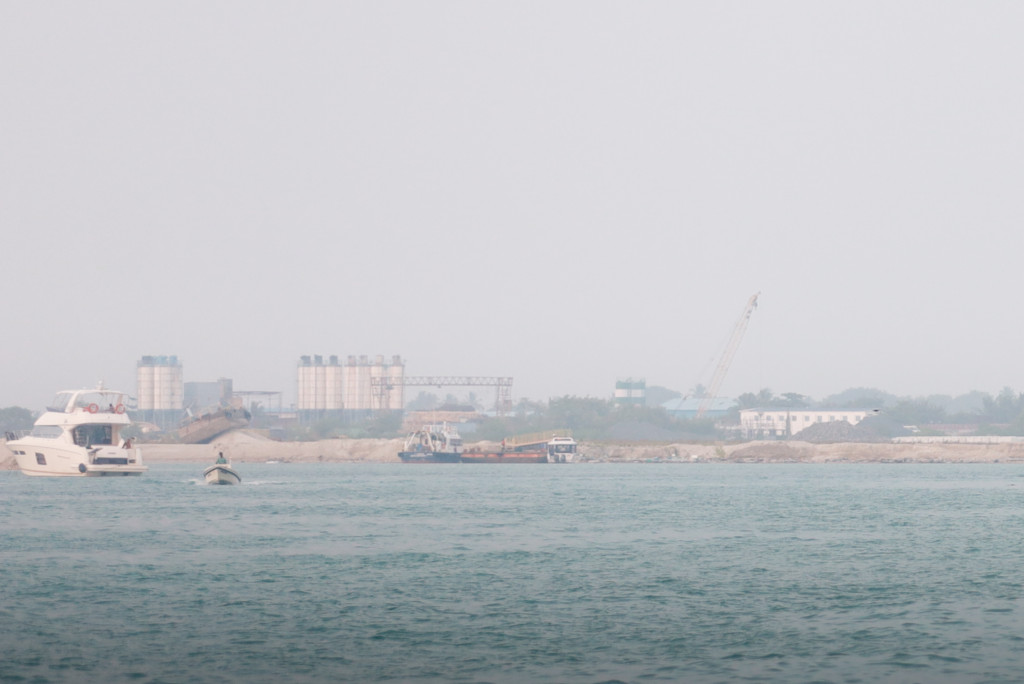
Photo: TMJ.
The Maldives Meteorological Service has warned that the thick haze affecting much of the country is likely to persist for the next few days.
In a statement issued Thursday, the agency said air quality in the northern and central atolls has further deteriorated, with reduced visibility caused by increased fine particles in the atmosphere.
Data from IQAir shows that Malé’s Air Quality Index (AQI) currently stands at 112, placing it in the “unhealthy for sensitive groups” category. At this level, young children, the elderly, and people with respiratory or heart conditions are advised to limit prolonged outdoor activity, while the wider public may also begin experiencing discomfort.
Malé’s PM2.5 concentration is recorded at 40 µg/m³, eight times higher than the WHO’s recommended annual guideline.
-Health officials recommend:
- Minimising outdoor exercise
- Keeping windows closed
- Using masks outdoors for vulnerable groups
- Running air purifiers indoors
Unlike fog or mist, haze is formed by tiny pollution particles that reduce visibility and affect air quality. The Maldives commonly experiences hazy conditions during the December–January period, as the Hulhangu Monsoon shifts to the Iruvai Monsoon.
Environmental experts note that the phenomenon has intensified in recent years, largely due to industrial emissions from nearby countries.