Wednesday
18th Nov 2026
Dhivehi Edition
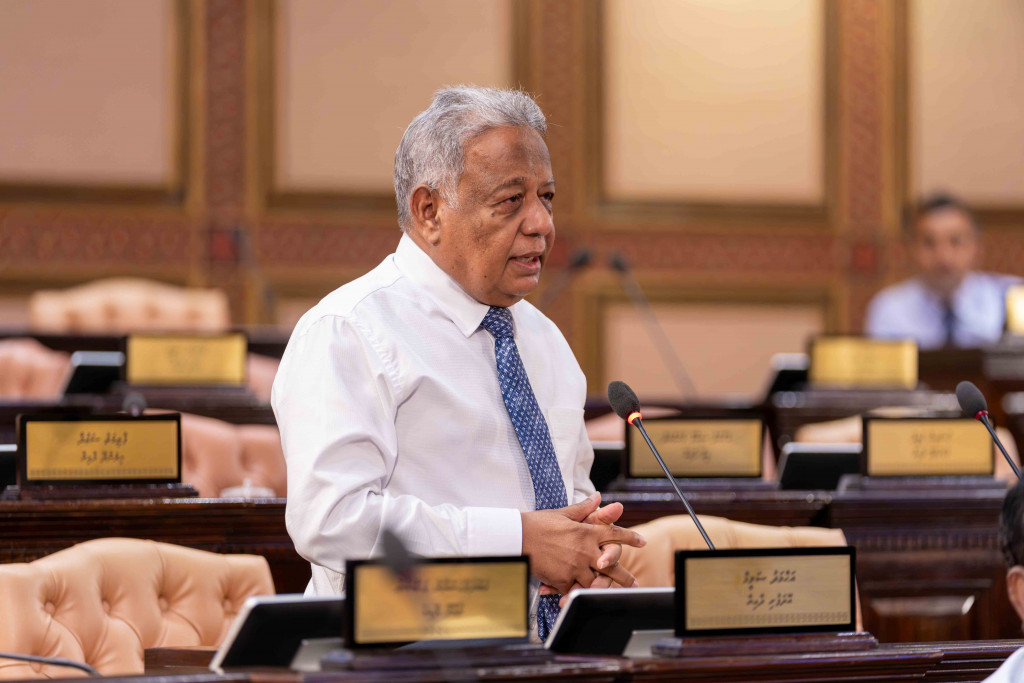
Deputy Speaker of the People’s Majlis & Eydhafushi MP Ahmed Saleem
The public debt accumulated under the current administration will remain lower than that of the past two governments, Deputy Speaker of the People’s Majlis and Eydhafushi MP Ahmed Saleem stated during the parliamentary budget debate.
Speaking on the floor, Saleem noted that unlike previous years where proposed state budgets consistently increased, the latest budget reflects a contraction of approximately MVR 4 billion. He highlighted that by the end of 2023, the national debt stood at approximately MVR 124 billion.
Saleem detailed that after accounting for debt repayments, net debt generated over the current administration’s four years stands at roughly MVR 30 billion. Even by the conclusion of its five-year term, total debt generated is projected to reach no more than MVR 40 billion, marking a significant slowdown in borrowing compared to previous administrations.
"Therefore, looking at our debt levels this year and projected debt in the final budget next year, it will stand at around 40 billion. This means the debt generated by this government is expected to be lower than the past two governments. This is the reality," Saleem said.
He emphasised that these fiscal figures remain evident in the budget documents and clear to members of the Public Accounts Committee.
Highlighting government revenue, Saleem expressed satisfaction that domestic revenue is projected to hit historic levels, fully covering the state’s recurrent expenditure. He cautioned against borrowing to finance operating expenses and civil service payroll, stressing that loan financing should only be deployed for visible, productive public infrastructure projects.
According to Saleem, state employees' salaries account for MVR 17 billion, while aid and government subsidies account for MVR 13.9 billion—representing nearly one-third of total state revenue.
Saleem added that public awareness regarding state assistance remains inadequate, pointing out substantial state spending to keep electricity, water, staple foods, and fuel affordable. He urged relevant state authorities to better inform the public about how state subsidies directly reduce their cost of living.