Tuesday
17th Nov 2026
Dhivehi Edition
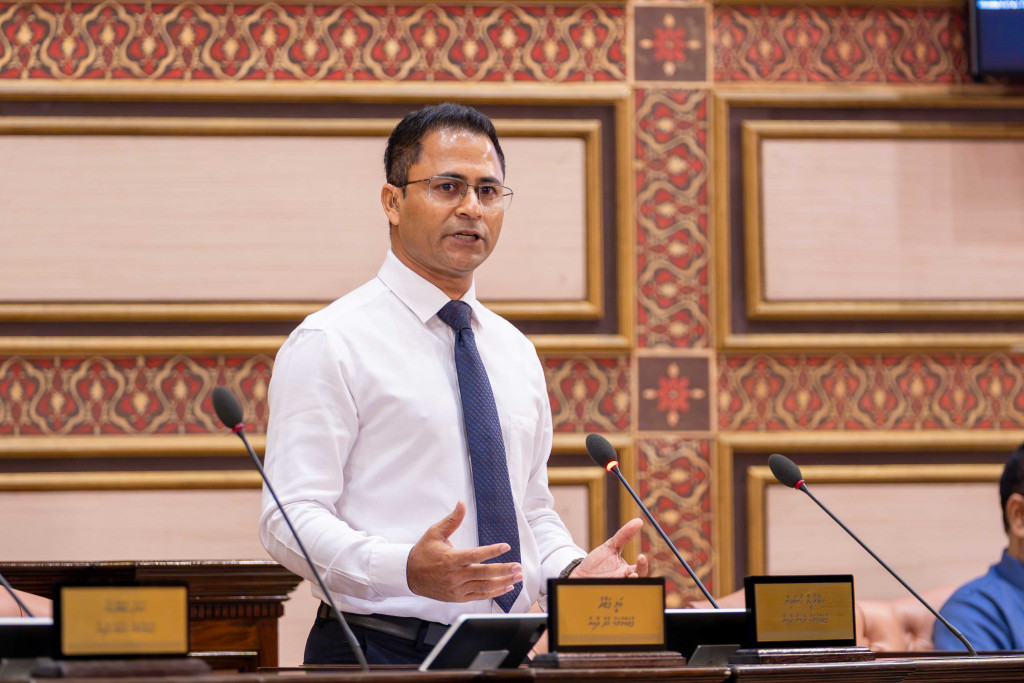
Fuvahmulah South constituency MP Ibrahim Hussain---
The state budget places its strongest emphasis on public housing and strengthening the national healthcare system, MP Ibrahim Hussain of the Fuvahmulah South constituency stated during the parliamentary budget debate.
Speaking on the floor of the People's Majlis, MP Hussain highlighted the major allocation dedicated to upgrading healthcare infrastructure. He noted that enhancing domestic medical facilities would reduce the country's dependence on outbound medical travel, preserve foreign currency reserves, and place the universal health insurance scheme, Aasandha, on a more sustainable financial footing. Pointing to regional healthcare deficits, he noted that Fuvahmulah Hospital lacked even basic CT scan services prior to the current administration.
Addressing housing policy, the lawmaker called for a departure from allocating state-funded land solely to Malé residents. Hussain argued that land reclamation funded through sovereign debt and public taxes belongs to all Maldivians and must be distributed equitably across the nation. He added that the majority of housing initiatives underway are targeted for completion by 2028.
Turning to economic sustainability, Hussain stressed that continuous reliance on imported fuel is unsustainable, commending the budget's focus on renewable energy investments. He identified the Rasmale project as vital for expanding non-tourism economic sectors and generating tax revenue, asserting that criticism directed at the initiative aimed to curb economic growth.
The MP also addressed the nation's severe fiscal pressures, observing that against annual foreign currency revenues of 2.1 billion dollars, external debt servicing demands approximately 1.35 billion dollars, with fuel imports absorbing nearly 700 million dollars. Despite global market volatility, he noted that the government has maintained consumer electricity subsidies, expenditure that has grown from a budgeted 1 billion rufiyaa to nearly 4 billion rufiyaa.
Concluding his remarks, Hussain expressed confidence that nationwide reclamation and housing programs, coupled with broader economic reforms, will resolve persistent foreign exchange shortages and provide long-term relief to citizens.