Sunday
15th Nov 2026
Dhivehi Edition
Minister Hassan Zareer
Private Capital Vital to Meet Infrastructure and Climate Resilience Goals: Zareer
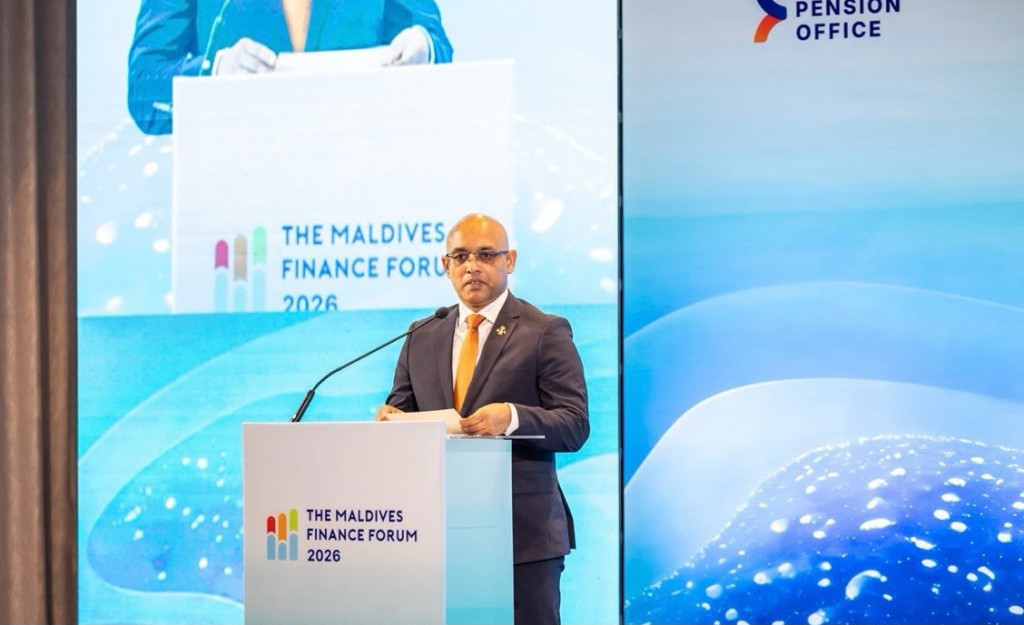
Minister of Finance and Public Enterprises Hassan Zareer---
Long-term private sector investments and institutional financing are crucial alongside the state budget and international assistance to build infrastructure and safeguard essential public services, Minister of Finance and Public Enterprises Hassan Zareer said today.
Speaking as the chief guest at the opening of the 13th Maldives Finance Forum 2026, Minister Zareer stated that substantial capital investments in renewable energy, environmental conservation, and water security are necessary to realize the nation's goal of becoming a developed country by 2040. He emphasized that private capital is needed to meet these demands without burdening future generations with excessive debt.
Minister Zareer underscored that climate change poses a direct threat to the Maldivian economy and the livelihoods of its people. Noting the critical role marine ecosystems play in sustaining tourism and fisheries as well as protecting low-lying islands, he stressed that development projects must integrate climate resilience into their planning and financing frameworks.
"Climate risk is economic risk. And economic risks must be managed," Zareer stated.
Addressing the energy sector, the minister highlighted the heavy investments needed to achieve the target of generating 33 percent of the country's energy from renewable sources by 2028, noting that expanding clean energy would significantly reduce the Maldives' dependence on imported fossil fuels.
The minister also shared that the government is advancing both the National Sustainable Finance Roadmap and the National Financial Inclusion Strategy. He pointed to the accreditation of Maldives Finance and Leasing Company (MFLC) as the first direct access entity to the Green Climate Fund (GCF) as a key step forward in unlocking international climate funds.
Encouraging commercial banks to introduce specialized financial products for sustainable initiatives, Minister Zareer called on businesses to present bankable and impactful proposals. He concluded by affirming that the success of green financing will be measured by tangible outcomes on the ground—stronger infrastructure, reduced reliance on fuel imports, and greater economic security for Maldivians.