Monday
9th Nov 2026
Dhivehi Edition
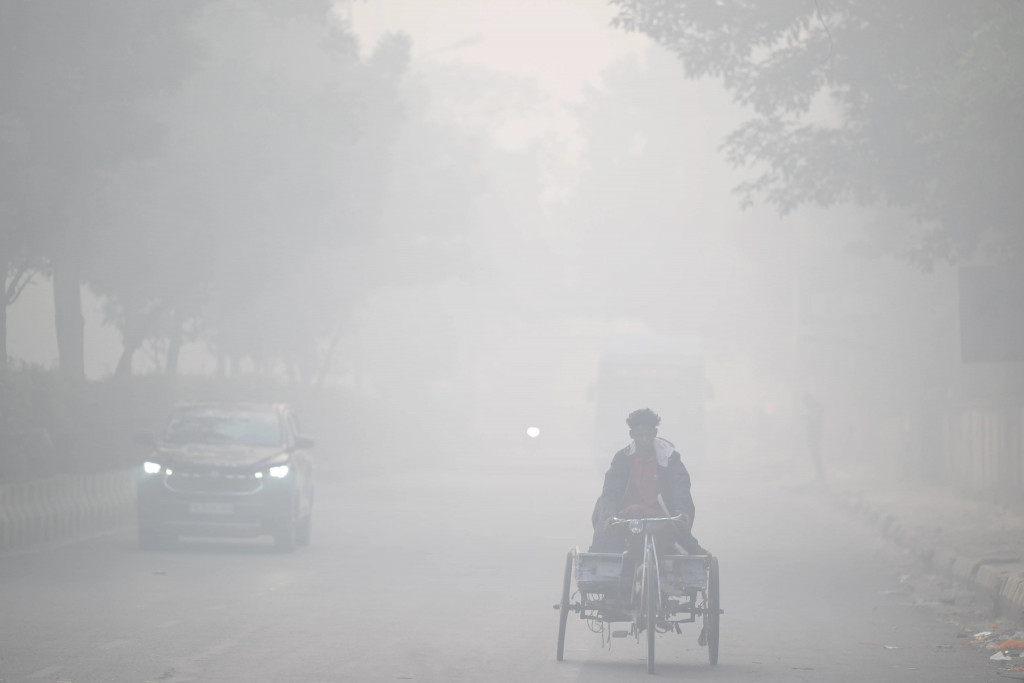
Air quality across New Delhi deteriorated to hazardous levels, Photo: Al Jazeera
Air quality across New Delhi deteriorated to hazardous levels today after residents set off firecrackers late into the night during Diwali celebrations, directly defying orders issued by India’s Supreme Court.
Earlier this month, the Supreme Court mandated that only eco-friendly firecrackers be used during designated time windows to curb seasonal spikes in pollution. However, reports confirmed that fireworks were set off well into the early morning hours across both Delhi and Mumbai in breach of the directive.
In several parts of the capital, home to approximately 20 million residents, the Air Quality Index (AQI) surged past 400—a bracket categorized as "hazardous" to human health. The skies, lit up by fireworks on Sunday night, were blanketed by a dense layer of toxic smog by Monday morning.
Reports indicated that pollution levels in parts of Delhi-NCR reached up to 50 times the World Health Organization’s (WHO) safe 24-hour baseline.
According to Swiss air-monitoring group IQAir, New Delhi ranked as the third most polluted city globally this morning. The capital battles severe air pollution every winter caused by vehicular emissions, industrial discharge, and crop stubble burning in neighboring states. The mass bursting of crackers by over a million revelers discharged immense volumes of particulate matter (PM2.5 and PM10) alongside black smoke. Notably, this past Saturday, Delhi recorded its worst pre-Diwali air quality in a decade.
Health specialists warned that firecracker emissions release dangerous concentrations of toxins and PM2.5 particulates, posing severe health hazards to children, the elderly, and individuals with chronic respiratory illnesses.
While local authorities enforced seasonal pollution curbs starting 1 November—restricting vehicle traffic and halting construction activities—environmental advocacy groups maintain that court orders and legal restrictions alone cannot solve the crisis without individual responsibility and sustained public compliance.